
Over the years I've lived in all three of these, more or less in order: a goshiwon when I first moved out on my own with almost nothing, a one-room once I had a steady income, and eventually an officetel when I could finally afford the upgrade. Each one taught me something the listings never tell you. So instead of a neutral comparison, here's the honest version, including the parts I got wrong.
Goshiwon: The Cheapest Entry Point
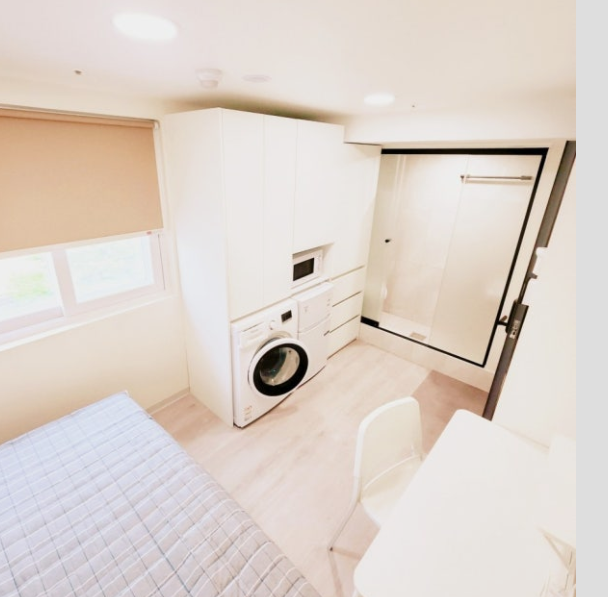
A goshiwon (고시원) is a micro-room, originally built for students cramming for government exams. The rooms are tiny, usually 4 to 7 square meters, but they come with a bed, a desk, and sometimes a closet-sized private bathroom. Basic meals, normally rice and kimchi, are often thrown in. My first goshiwon room was so small I could touch both walls lying down, and honestly, for my first two months, it was exactly enough.
Monthly cost: ₩300,000–₩600,000 depending on location and amenities.
Who it's right for:
- You just arrived and need somewhere cheap while you sort out your situation
- You'll be out of the room most of the day and only need a place to sleep
- You're on a tight budget and location matters more than comfort
What to watch out for:
- Walls are thin to the point of being theoretical. I could hear my neighbor's 6 AM alarm as clearly as my own, plus his phone calls and the occasional late-night argument.
- Shared kitchens are often crowded and poorly maintained
- No space to have guests or work from home comfortably
- Some buildings are old and poorly ventilated — check the room in person before paying
Goshiwons in Sinchon, Hongdae, and near universities are generally cleaner and better managed than those in random residential neighborhoods.
One-Room (원룸): The Practical Middle Ground
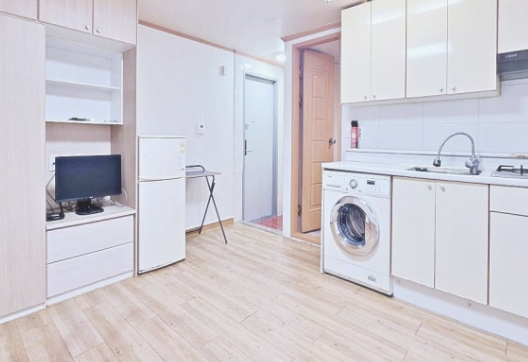
A one-room is exactly what it sounds like — a single room that serves as your bedroom, living room, and sometimes kitchen. Private bathroom is standard. These are the most common type of rental for young singles in Korea.
Monthly cost: ₩400,000–₩900,000 (monthly rent / 월세), typically with a deposit (보증금) of ₩3–10 million.
Who it's right for:
- You're staying for 6+ months and want your own proper space
- You work from home or need a comfortable setup for a desk and some furniture
- You want to cook your own meals regularly
What to watch out for:
- The deposit system can be confusing — make sure you understand jeonse vs wolse before signing anything
- Many one-rooms are in older buildings with poor insulation — ask about heating bills in winter
- Read the contract carefully; breaking a lease early usually costs a month's rent
One-rooms near subway stations in areas like Mapo, Seongbuk, or Gwangjin offer excellent value. Avoid areas near nightlife districts if you want quiet nights.
Officetel (오피스텔): The Premium Option
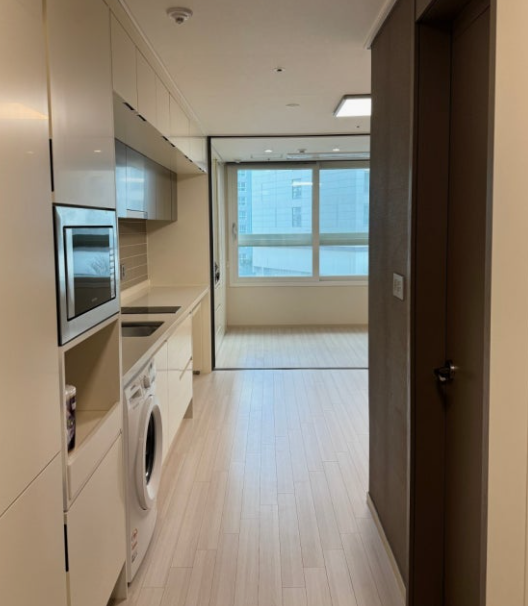
An officetel is a hybrid space — legally classified as commercial but used almost universally as a residential unit. They're newer, better designed, and often come with building amenities like a gym, security desk, and package storage.
Monthly cost: ₩700,000–₩1,500,000+, with higher deposits (₩5–20 million is common).
Who it's right for:
- You have stable income and want a comfortable, modern space
- You're working remotely and need a proper home office setup
- You want the convenience of a newer building with proper management
What to watch out for:
- Management fees (관리비) can add ₩100,000–₩200,000 per month on top of rent
- The interior looks great in photos but check the actual size — some officetels are surprisingly small for the price
- Utilities are often metered separately and can run high
Side-by-Side Comparison
- Price: Goshiwon < One-Room < Officetel
- Privacy: Goshiwon (low) < One-Room (medium) < Officetel (high)
- Flexibility: Goshiwon (monthly, easy out) > One-Room > Officetel (longer contracts)
- Comfort: Goshiwon (minimal) < One-Room < Officetel (high)
My Honest Recommendation
If you just arrived in Korea and don't know how long you're staying: start with a goshiwon. It keeps your costs low and your options open while you explore neighborhoods.
If you're committing to 6–12 months: get a one-room. The combination of privacy, kitchen access, and reasonable cost is hard to beat.
If you're earning a solid salary and plan to stay long-term: go officetel. The comfort and building management are worth the premium once you've settled in.
Whatever you choose, always visit in person before signing anything. Photos lie, and landlords in Korea are not legally required to disclose everything proactively.


